

Edelman has published a new report which examines the impact of thought leadership content on LinkedIn, and how professionals are utilizing thought leader content within their decision-making process.
Based on insights from “more than 1,100 management-level professionals,” Edelman’s 2026 B2B Thought Leadership Impact Report provides notes on the shifting B2B landscape. In particular, it looks at the role professional expertise plays in the artificial intelligence era.
According to the report, that role is still significant.
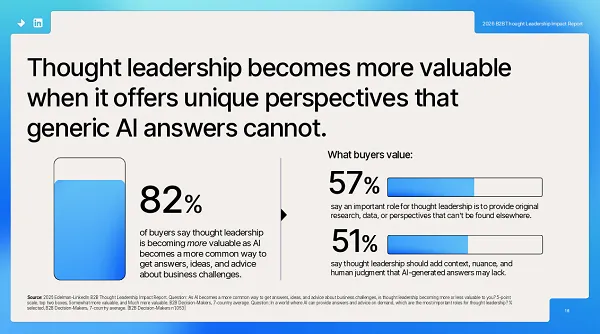
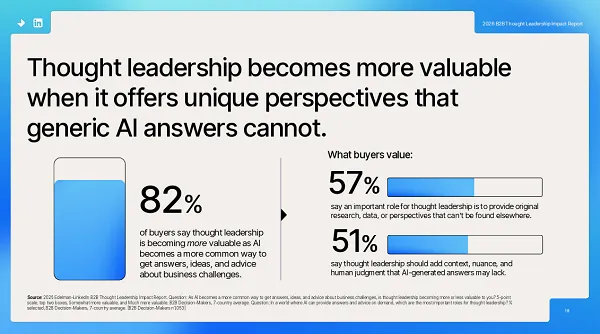
Edelman’s data showed that 82% of buyers believe that thought leadership is becoming more valuable, with original research, insight and experience now being more of a differentiator.
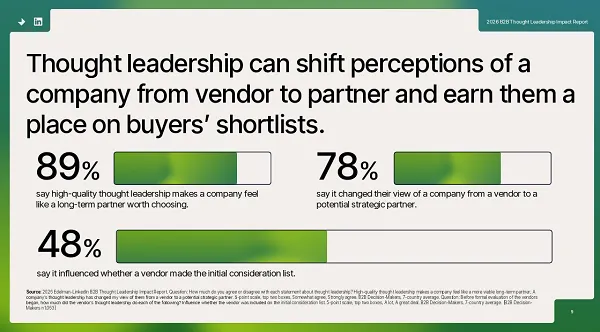
The data also showed that 89% of buyers view high-quality thought leadership content “makes a company feel like a long-term partner worth choosing.”
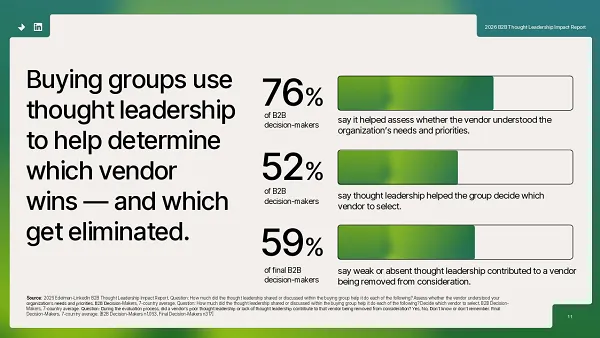
What’s more, a brand that doesn’t share thought leadership content can risk being eliminated from consideration for some potential partners.
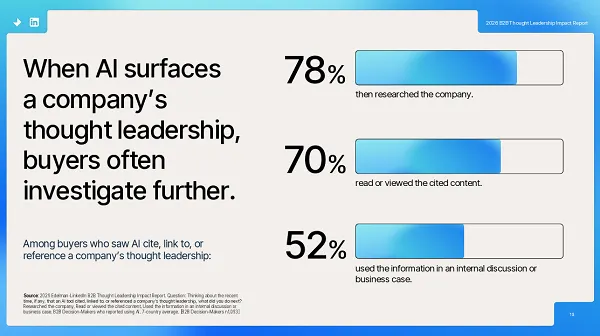
And while AI tools are now playing a bigger role in the discovery process, the data also showed that most buyers still validate AI recommendations by referring to a brand’s content.
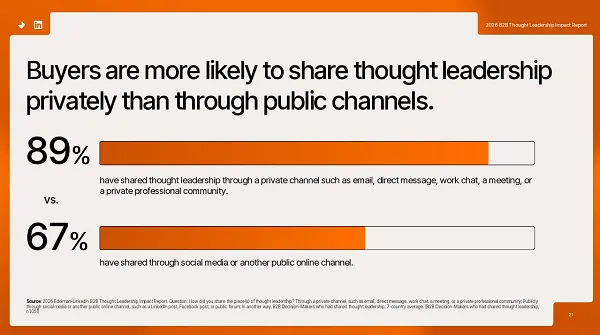
Also worth noting: Buyers are more likely to share thought leadership content in private channels.
There are also some interesting notes on the value of external influencers when it comes to endorsing a business, and the importance of brands continuing to produce thought leadership content to reinforce existing partnerships.
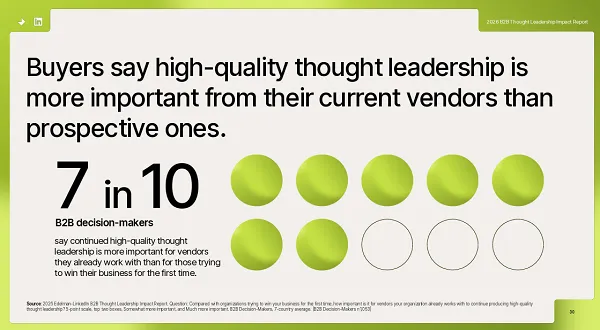
In summary, while product research is changing, and more business buyers are using AI tools to find relevant products, original brand content still plays a key role in winning deals and assuring buyers that they’re making the right decision.
The key differentiation, then, is expertise and unique insight that nobody else can provide. Even in the age of AI, where digital systems can summarize information, AI can’t provide real, hands-on experience and insights. It also can’t summarize information that doesn’t already exist.
Hence the need for more thought leadership-type content, and for brands to differentiate themselves through expanded sharing of their professional expertise.
Source link


