Get RNS’ thoughtful, essential religion reporting every morning. Sign up for free!
LIMA, Peru (RNS) — Pope Leo XIV met with six abuse survivors in Peru on Thursday (Nov. 12), including several abused by Sodalitium Christianae Vitae, according to the Vatican’s press office. Though Leo’s role in suppressing Sodalitium was once lauded as a significant achievement in addressing the church’s abuse crisis, including sexual abuse, Sodalitium survivors have been warning that the suppression could be meaningless without more action from the Vatican.
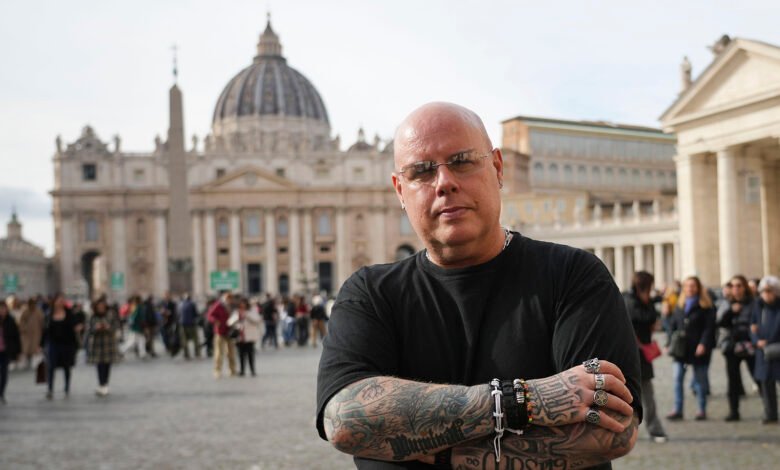
“I doubt that the promises made by (Leo) in that encounter will be fulfilled,” wrote José Enrique Escardó Steck, president of the Red de Sobrevivientes Perú (Survivors’ Network Peru), on X in Spanish, saying that Leo had yet to make progress on abuse since Escardó last spoke with him in January 2025. “The church (is) always destroying and revictimizing. They could have said two weeks ago that they already had victims ready to meet with the pope, but no, they let hundreds of victims be worried, anxious and frustrated.”
Last year, Pope Francis suppressed Sodalitium Christianae Vitae, a powerful lay Catholic society founded in Peru as a conservative reaction to liberation theology, after a Vatican investigation found “sadistic” abuses, including sexual and spiritual misconduct. Earlier this year, the Vatican held a ceremony seeking forgiveness and acknowledging harm suffered by Tallán Indigenous communities who suffered “persecution, land expropriation, and harassment” at the hands of the society, according to the Vatican.
Sodalitium survivors credited Leo, then-Bishop Robert Prevost, with playing an “extremely important role” in supporting victims and with triggering the eventual intervention of the Vatican. Prevost became bishop of Chiclayo in 2015, a year after Paola Ugaz and Pedro Salinas’ investigative book, “Mitad Monjes, Mitad Soldados” (Half Monks, Half Soldiers), made waves after describing sexual, physical and psychological abuse within Sodalitium, and he was serving in the Vatican curia when Sodalitium was suppressed.
When he became pope, several Sodalitium survivors publicly cheered him on, though not all abuse survivors were thrilled. Ana María Quispe Díaz told reporters Leo had mishandled her case after she reported Diocese of Chiclayo priests — who were not tied to Sodalitium — had sexually abused her as a girl. Quispe Díaz was briefly represented by a canon lawyer with ties to Sodalitium, though she has more recently said he did not intend to help her and other victims.
“The suppression of Sodalicio is very important worldwide because it’s the biggest congregation with an extensive presence in many countries that has been suppressed,” said Véronique Lecaros, theology department chair at the Pontifical Catholic University of Peru.
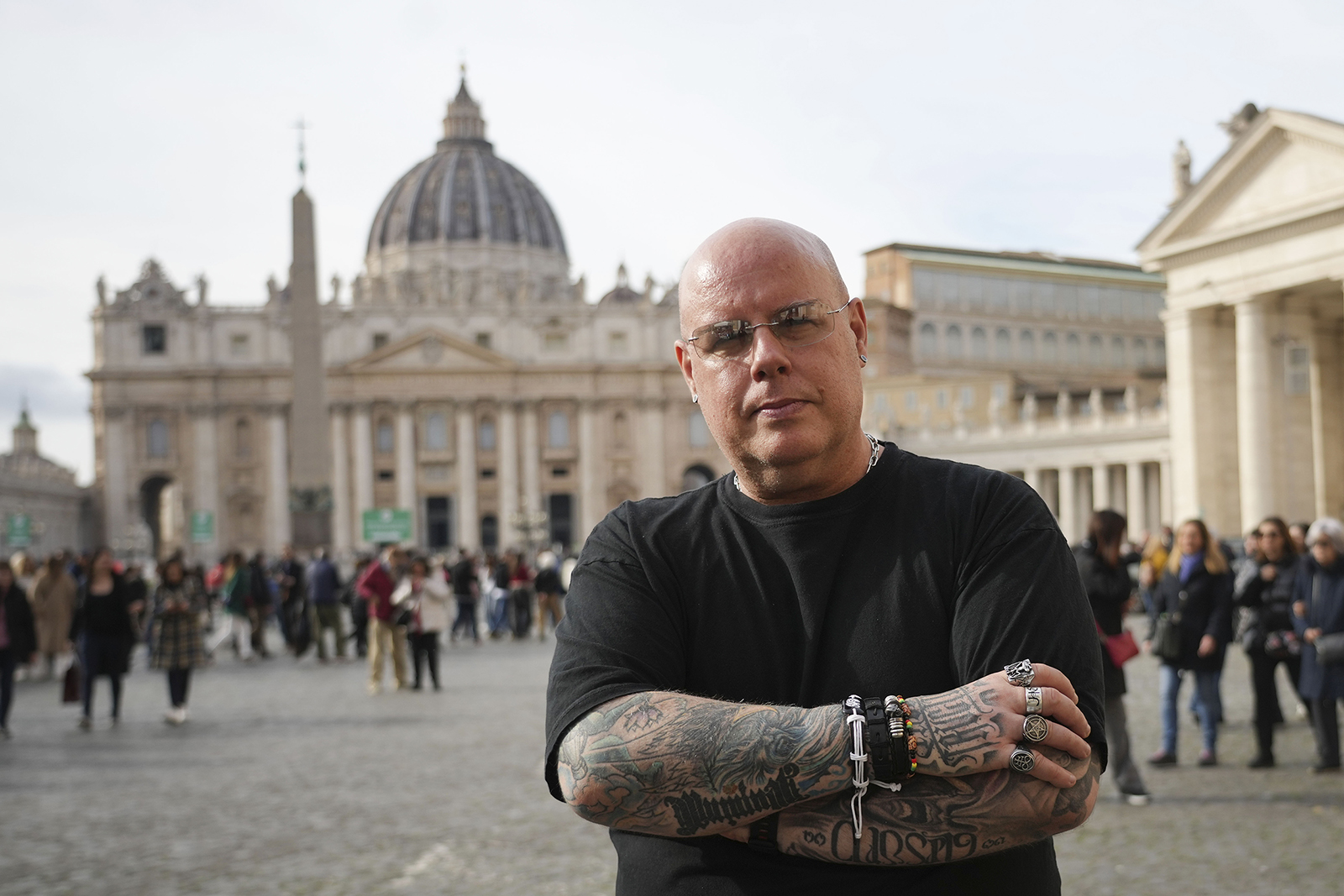
But survivors of the group and other anti-abuse advocates say that Sodalitium’s suppression will remain simply a declaration, not a reality, without concrete follow-through by the Vatican to dismantle the group.
“The only thing they’ve done is take away the name Sodalitium,” Escardó told RNS in Spanish. Escardó has said that, as a teenager, he was physically and sexually abused by Sodalitium co-founder Germán Doig, who died in 2001.
“The same leaders have stayed in the same places, the same priests in the same places with the same names, the parishes with the same symbols, the same activities, inviting the same members of Sodalitium who have been expelled to continue doing exactly the same with the same financial support that they had before,” Escardó told RNS.
He and other Sodalitium survivors have called on Leo to ensure that the Vatican’s dissolution process makes a real difference in diminishing Sodalitium’s power and making reparations for survivors.
“There continue to be actions that revictimize those of us who believed that this process would bring truth, justice and reparation,” according to a statement Escardó signed.
Another group of survivors signed a separate statement thanking Francis and Leo for suppressing Sodalitium before enumerating a list of concerns. Among those concerns, they said that four Peruvian bishops allegedly cooperated with a group tied to Sodalitium to allow the group to own cemeteries, that an allegedly abusive priest continues to be pastor at a former Sodalitium parish and that a man who was allegedly a former secretary for Luis Fernando Figari — Sodalitium’s co-founder who the Vatican expelled from the group after sexual abuse allegations — is continuing to give classes at that same parish.
That parish, Nuestra Señora de la Reconciliación, is in one of the most affluent areas of the city and country, where many of the houses sit behind their own gates. Many in Sodalitium are in the upper class, Lecaros said. “ If you think of the upper class, in Peru it’s a relatively small group, but they are all connected, even family ties.”
The parish did not respond to a request for comment. Neither did the diocesan offices for the four bishops named in the statement.
The Asociación Civil San Juan Bautista (Civil Association of St. John the Baptist), which owns the cemeteries, did not respond to requests for comment. In a statement after the suppression of Sodalitium, they said that though they have cooperated in the past, there are no legal ties between them and Sodalitium. The cemeteries they own have run ads during television coverage of the papal trip and sponsored at least one billboard welcoming Leo.
Renzo Orbegozo Benvenuto, a Sodalitium survivor who led the creation of that statement, said he wanted to make sure to thank Leo and Francis and express support for Monsignor Jordi Bertomeu Farnós, who was appointed as the pontifical commissioner to lead Sodalitium’s dissolution. “I don’t think this is a moment to accentuate differences,” Orbegozo told RNS in Spanish about the two different statements, saying they have the same goals.

Escardó has been less publicly supportive of Bertomeu and more critical of communication from the Vatican. “Now, at this moment, there is not much confidence in the Vatican process that Jordi Bertomeu is going to carry out. There’s a lot of silence.”
Bertomeu did not respond to requests for comment relayed through the Vatican press office.
As Sodalitium survivors express anxiety about Sodalitium’s dissolution, one of the journalists whose investigation helped lead to the group’s dissolution is facing yet another challenge. Ugaz, who has faced repeated defamation lawsuits that carry the threat of jail time, had yet another case accepted by a judge less than a month before Leo arrived, this one filed by the Civil Association of St. John the Baptist.
“The Peruvian system, which is a system that is very fallible to ties between friends, wants to teach a lesson through all these lawsuits against me,” Ugaz told RNS in Spanish. “It’s a lesson for journalists who are going to investigate powerful organizations.”
She feels that she, too, has unwittingly become a victim of Sodalitium’s power and impact, amid the lawsuits and as her family experiences pervasive harassment. “It’s incredibly hard. I can’t cry in front of my family,” she said, becoming emotional when she got a moment away from them. But she sees the impact on her oldest daughter, and her parents have witnessed harassment and disinformation against her.
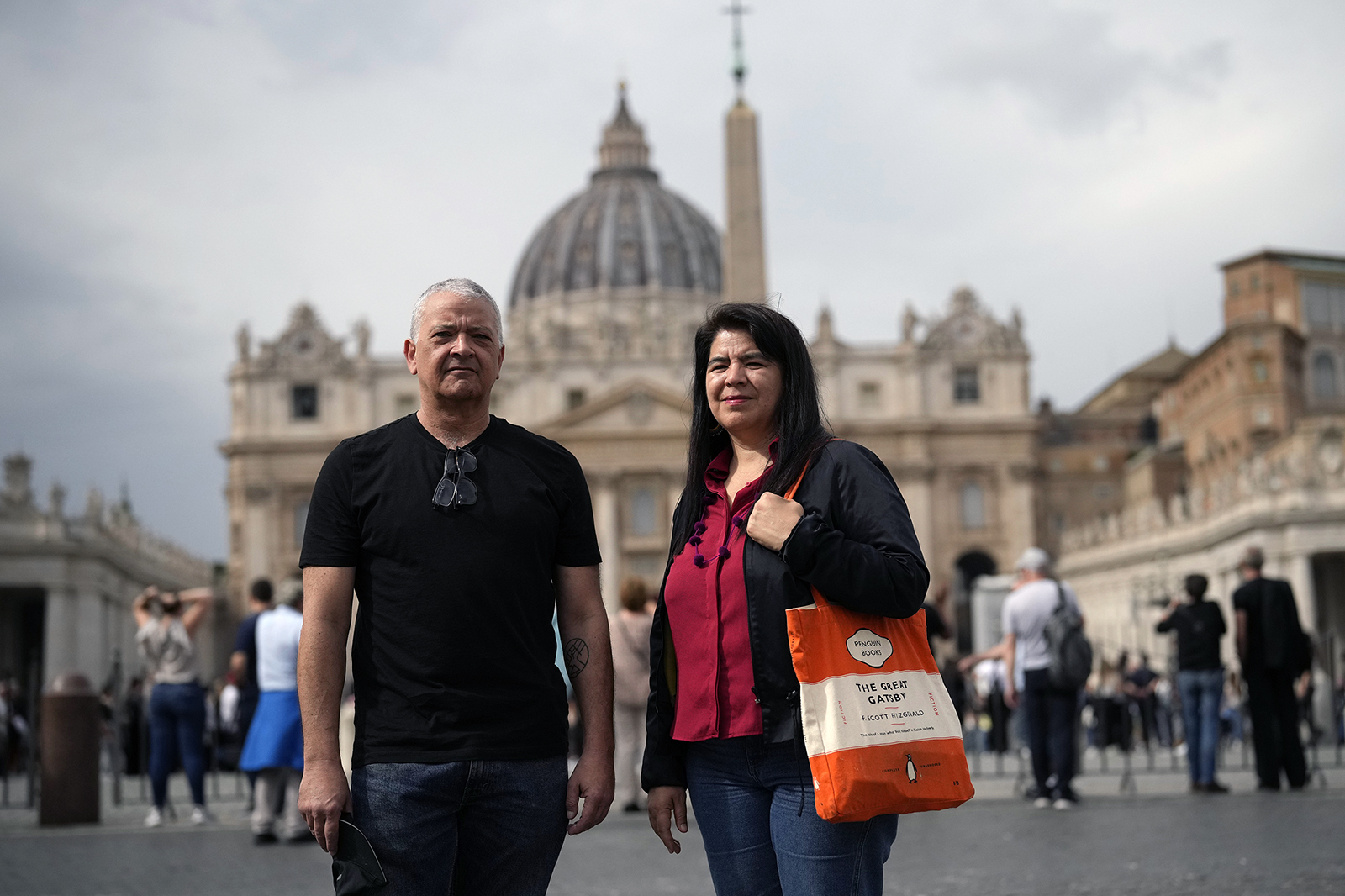
Leo signaled support for Ugaz by sending an anti-abuse message to be read at a theatrical production in Lima called “Proyecto Ugaz” that honored the journalist. “Wherever a journalist is silenced, the democratic soul of a nation is weakened,” Leo wrote.
At a press conference in Lima on Nov. 5, Anne Barrett Doyle, co-director of the U.S. watchdog organization BishopAccountability.Org, called on Leo to condemn the persecution of journalists who had exposed Sodalitium, and shared two other demands: to instruct Peru’s hierarchy to publish the names of credibly accused clergy and to push the Peruvian government to create a truth commission to investigate religious sexual abuse of minors.
She was joined by Escardó and Reinhold Nann, the former bishop of Caravelí, Peru.
At the press conference, the case of Quispe Díaz came up. Barrett Doyle said she didn’t think Leo intended to mask any crimes, explaining, “ The character of Pope Leo seems to be genuinely kind.” She explained, “ I think he simply didn’t do enough because the system does not require him to do enough to deliver justice to the victims.”
“ He also is a canon lawyer who devoutly believes in canon law, and the problem there is that canon law is an extremely warped and distorted system,” said Barrett Doyle.
Quispe Díaz did not comment after several attempts to reach her for comment.
As for the Sodalitium case, Elise Ann Allen, a Vatican journalist who conducted the first public interview with Leo after his election, told RNS that the Vatican chose to pursue a quicker investigation that limited its ability to unravel Sodalitium financially. “They didn’t do the investigation well to begin with,” she said.
Allen said the Vatican pursued a quicker investigation to “get victims what they can and let everybody move forward.” She said, “If they’d wanted to pursue in a serious way the financial aspect of this, from the beginning they should have entrusted this to ASIF,” or the Vatican’s Supervisory and Financial Information Authority, though that investigation could take years and have political implications with the Peruvian government.
Sodalitium’s victims “would have been unhappy the other way as well,” she said of a longer investigation.
One group of Sodalitium victims from the Tallán Indigenous community, whom the Vatican recognized as suffering land expropriation due to Sodalitium, planned to arrive in Chiclayo on Friday in the hopes that Leo will hear and amplify their demand for justice.
“We are hoping for a message of justice, dignity and solidarity with the people who fight for their rights, because there can be no true peace without justice, nor reconciliation without recognizing the historic wounds of our peoples,” Luis Inga, a representative of the San Juan Bautista de Catacaos community, responded in a statement.
Source link